

Simply Mixed – The Podcast for Everyone
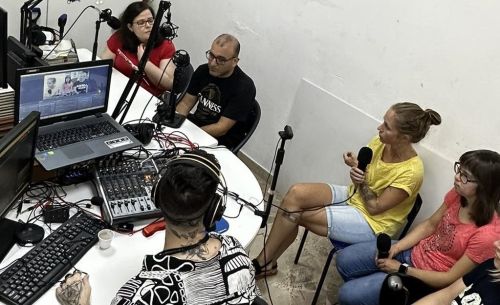
“Simply Mixed” is an inclusive podcast in which people with and without disabilities discuss topics that matter to all of us. The episodes explore everyday life, society, and personal experiences—in an easy-to-understand, authentic way and in the languages of our European project partners—so that as many people as possible can listen and discover new perspectives.
Here’s what you’ll find:
- Podcast episodes on topics such as inclusion, health, travel, sports, love, nutrition, fashion, current events, and personal development
- Episodes in German, Czech, and Italian
- Different perspectives and interesting interviews from various European countries.
Tune in and discover new stories and perspectives! Let yourself be inspired and experience just how diverse and enriching our society can be.
Our Results and Materials
Frequently asked Questions (FAQ)
Why does this podcast exist, and what does it aim to highlight?
Our podcast aims to ensure that everyone can participate in podcasting, especially people with disabilities. With “All Inclusive,” we want to show that every voice counts. We produce podcasts that are easy to understand so that people with disabilities can tell their stories and share their ideas.
The podcasts were created as part of the European project “All Inclusive – the podcast for everyone.” The project is funded by the EU’s Erasmus+ program. The project partners are from the Czech Republic, Germany, and Italy. They aim to help people learn, in simple steps, how to create their own podcasts. Podcasting should be accessible to everyone, regardless of their abilities or circumstances.
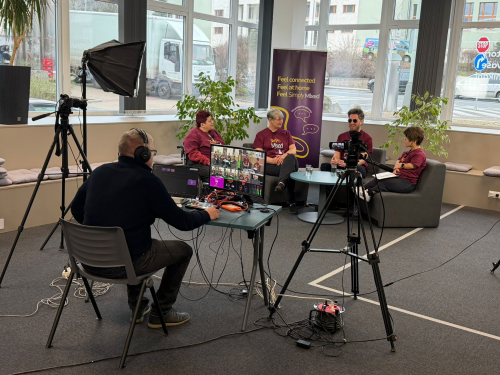
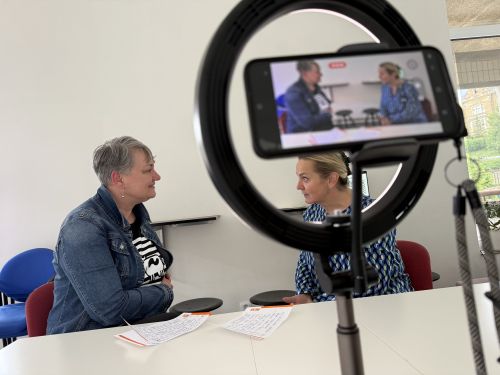
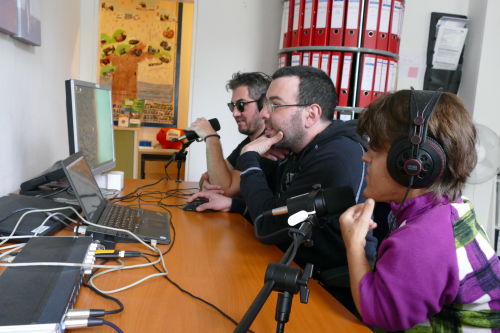
As part of our project, we’ve developed training sessions, easy-to-understand guides, and podcast episodes in plain language. These resources are designed to connect people, break down prejudices and stereotypes, and show that everyone can belong. We also host workshops and awareness-raising events to share our experiences and insights and inspire others to make podcasting more inclusive.
Are there people with disabilities on the podcast team?
Of course, they’re responsible for the entire podcast: as hosts, in research, in editing, and on social media. They choose the topics and content, invite guests they’d like to talk to, and give us a glimpse into their lives by sharing stories about themselves, their experiences, ideas, and hopes.
Is this podcast also suitable for people without disabilities?
Of course, that’s why we’re making it: We want everyone to feel included. The podcast is meant to be interesting for everyone, but at the same time, we also want to address topics and experiences that are part of the everyday lives of people with disabilities. That’s why we try to use language that’s as simple as possible, so the podcast is understandable to everyone.
Is there already a podcast like this?
There are only a few podcasts that are inclusive or that feature people with disabilities as hosts and producers. Often, however, the focus is on the topics of disability and inclusion. We want to do something different: We talk about topics that are interesting to everyone, and then we also consider the perspective of people with disabilities.
What topics are covered in this podcast?
In our podcast, we want to talk about topics that are interesting to everyone. These topics include:
- Travel
- Fashion
- Food and cooking
- Fitness, exercise, and personal care
- Love, dating, and relationships
- Movies and TV shows
- Current events and politics
- Sports and the Paralympics
- Personal development and self-improvement
- Dealing with mental health issues
- True crime stories and local criminal cases
- Inclusion: What is life like for people with disabilities?
How often are new episodes of this podcast released?
We plan to release one episode every month, which means at least 10 episodes per year.
Are other people interviewed on this podcast, and do they also have a disability?
Yes, we interview a different person in every episode. Sometimes that person has a disability or mental health issues, and sometimes they don’t. We simply interview people who have something interesting to say about the topic we’re discussing in each episode.
Does this podcast help listeners learn how to interact better with people with disabilities or how to understand them better?
Yes, absolutely! As the hosts talk about their experiences, you can learn more about people with disabilities.
Is this podcast recorded in simple language so that people with intellectual disabilities can listen to it as well?
We do our best to speak as simply as possible so that everyone can follow along easily. Our hosts speak naturally and normally. That’s why we don’t use strictly „easy“language, but rather simple and understandable language.
What does “Simply Mixed” mean, and why is that the name of this podcast?
We chose this title because it reflects what we hope to achieve: we want people to be able to come together easily and without stress, and to interact with one another naturally, even though they’re all different.
Is this podcast also suitable for deaf people or people with hearing impairments?
A “readable version” of a podcast episode can be created as a written transcript. To do this, you can use transcription programs or services that automatically convert audio files into text. Many podcast platforms already offer this feature.
The Czech and Italian podcasts are video podcasts. Our videos also support closed captions. If you turn on the closed caption feature, you can read what the people in the video are saying.
In addition, we create a short, easy-to-understand version for each episode. It summarizes the episode’s key points in simple language.
Can you find information about this podcast on social media (e.g., on Instagram)?
Yes, we’re active on social media:
For the German podcast, you can follow us on Instagram: simply.mixed.podcast
For the Czech podcast: lenka.cerna@dcul.eu – YouTube channel
For the Italian podcast: Web Radio Senza Barriere – YouTube channel
Does this podcast also offer tips for people with disabilities on how to deal with everyday challenges?
Our hosts and our interview guests share their real-life experiences. We therefore hope that every now and then you’ll pick up a tip that help you out on your daily life.